
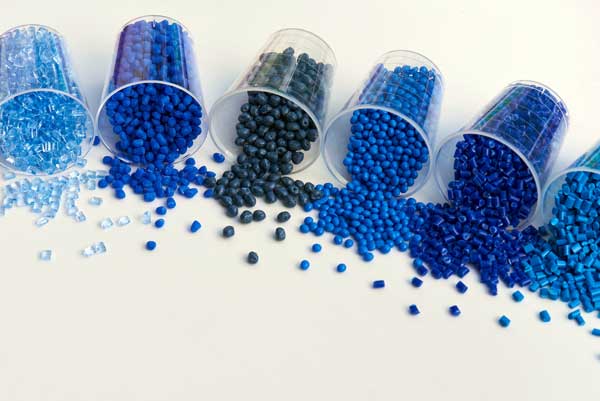
Color matching in plastic injection molding is often a key requirement. Colors are used for branding, safety, functionality and even operational reliability. Matching a color consistently across a run, or from job to job should be a fairly straightforward process, right? In reality, when it comes to high performance resins, it’s much more complicated. Achieving consistency is challenging when compared to commodity plastics such for many reasons. Today, we’ll look at them, and how they can be navigated.
Why Is Color Consistency Important?
Before we jump into the challenges, let’s look at a few examples of where color consistency is important:
Branding – The first, if not most obvious reason, is when colors are used to brand products. Power tools, medical devices, and electronics often use company color palettes in their product designs. As any marketer would tell you, when it comes to representing a brand, colors must always match – no matter the medium.
Identification – In addition to aesthetics, colors can also play functional roles. They are often used to help quickly identify things. A great example is a wire connector, which is color coded to help make sure that a technician selects the right one for the job. It’s a similar situation with medical triage, where surgical tools or drug delivery devices are color coded to indicate size, dosage, or specific uses. These are just a few of the many examples where colors are used for identification purposes.
Thermal Management/UV Resistance – here’s one you might not have thought of right away, but it’s important. Colors impact how the material behaves, particularly when subject to light and heat. Darker colors will absorb more radiation, while lighter ones will reflect it, staying cooler. This is critical for uses such as electronics enclosures. UV protection is also important for outdoor uses, as plastics can become brittle and crack.
The Challenges
Now let’s take at the main reasons why color consistency for engineering plastics remains a challenge:
Fillers – engineering resins are rarely used in their pure form, they are typically fortified with glass fibers, mineral fillers or flame retardants to meet functional requirements. The problem? Many of these have greyish or yellow tones to them. Fibers, on the other hand, will reflect light differently than the base, which could make the color look washed out.
High-Temperature Chemistry – certain applications call for extreme heat tolerance. This is where engineering resins like PEEK, PPS and Sulfones come in. However, the very heat that is used to process these resins often degrades the pigments that are used to color them. As a workaround, inorganic pigments or metal oxides may be used. While they are much more stable, they offer a limited color palette.
Based Resin Tint – many base resins, such as nylon and polyetherimide, have a strong natural color to them. However, their hues tend to shift from lot to lot. This is due to factors such as moisture content and age of the material.
Metamerism – now there’s a word you don’t hear every day! While you might not know it by name, you’re likely familiar with the concept. Metamerism occurs when two different parts can appear to match under certain lighting conditions, such as LED, then look completely different under natural or fluorescent light. This is particularly true when one part uses an engineering resin, and other parts may use commodity materials. Ensuring a match across these parts requires the use of spectrophotometer calibration, coupled with a deep understanding of light physics.
Conclusion
Color consistency in plastic injection molding isn’t always a requirement, but when the application calls for it, it can certainly be a challenge. Ultimately, it’s a balance act between chemistry, physics and also mechanical integrity. If you add too much pigment to force a color, this could degrade its physical properties. But when it’s non-negotiable, consistency can be achieved when working with an experienced team of designers, resin suppliers and injection molding companies.
Comments are closed