High Volume Injection Molding: An Overview
Leave a CommentHigh Volume Injection Molding: An Overview
High volume injection molding is a specialized plastic manufacturing process that produces large quantities of identical parts efficiently and cost-effectively. It is found in many applications that require large quantities of quality parts. Major markets include automotive, industrial, medical, defense, firearm accessories, and consumer goods among other critical applications. The process represents an evolution of the standard plastic injection molding methods, to accommodate the demands of higher annual quantities. Today, we’ll look at the process and its benefits, how it differs from conventional methods, and some typical parts it produces.
What is High Volume Injection Molding?
High volume injection molding involves quickly injecting molten plastic into a mold cavity, where it cools and solidifies into the desired shapes. The process is highly automated, allowing for rapid production cycles and consistent part quality. You’re probably wondering how big is a high volume run? While it depends on who you ask, for PDI, it generally covers jobs ranging from 100,000 pieces to well over 1 million pieces annually.
Benefits of High Volume Injection Molding
The most obvious benefit is cost-effectiveness, thanks to economies of scale. As volume increases, unit cost decreases. With the help of automation and advanced machinery and processes, turnaround time is also reduced, while quality is strictly maintained. Part design is not compromised, as intricate parts can be repeatedly produced at high speeds in a consistent manner when appropriate tooling and process considerations are made.
How is High Volume Molding Different than Standard Runs?
Above all, the high volume injection molding process requires that parts be produced quickly without sacrificing quality. To facilitate this, many considerations are made throughout the entire process, these include:

- High Volume Tooling – this is crucial to the success of any high volume program. Tooling must be designed to withstand rapid cycles and higher pressures. They are engineered and produced to exacting tolerances, to ensure that every part produced conforms to precise specifications. This level of precision minimizes defects and reduces the need for rework. High-volume multi-cavity injection molds and mold components are often made of higher quality materials such as steel or steel alloys, rather than aluminum.A key feature of a high speed injection molds is higher cavitation, allowing many parts to be molded at once. Rather than producing just a single piece, these molds can produce 4, 8 or 16 in one machine cycle. This significantly increases output and reduces process time. Tooling may include other features like hot runners, balanced mold cavities and runner systems, and optimized cooling channels to achieve optimal processing conditions. But high-speed / high-cavity injection molds also come with higher upfront costs to produce.
- Industrial Strength Machinery (and Process) – Injection molding machines for high volumes are engineered for high-speed operation. With this comes increased stress, and the production process and equipment must be able to handle it. To do so requires a strategic mix of automation and modifications across the production line. Let’s take a closer look.For the pre-injection phase, automated systems transport and feed the resin into the machine. Then high-performance hydraulic or servo-hydraulic systems are used to deliver molten material at high speed and pressure in to the mold. Higher clamping forces are required to withstand the rapid opening and closing of the mold. Servos are used to control clamping force as well as injection speed. The molding press’s injection unit also relies on a high-output screw for quick melting and homogenization of the plastic resin.Cooling the molded part quickly and consistently is equally as important as injection rates. Automated temperature controls systems facilitate this by regulating cooling rates through control of tool steel temperatures.Other components are also integrated into the process including advanced control systems to manage timing and pressure control.Once the parts have cooled, robots swiftly extract the parts, further reducing cycle time while preventing damage to the molded component or injection mold. Machine vision systems typically inspect the parts, rejecting ones that do not meet the required specifications. Robots can then place parts onto conveyors, into bins, or directly into an automated assembly process. This specialized and automated processing and handling equipment can also perform other labor intensive tasks such as trimming and packaging, creating a fully automated production line and ultimately the most economically manufactured molded part.
What Types of Parts or Jobs Qualify for High Volume Injection Molding?
Generally speaking, high volume injection molding is ideal for producing large quantities of identical parts with consistent quality. Common applications include:
- Automotive Components – countless interior and exterior parts and under-the-hood components
- Medical Devices – disposable syringes and other consumables, diagnostic equipment, enclosures and housings
- Industrial Parts – connectors, housings, and enclosures
- Consumer Goods – electronics, household appliances, and packaging
If you require lower quantities but want to reap the benefits of high volume production, many shops including PDI will offer inventory management programs. These allow you to take deliveries, scheduled or as needed, minimizing warehousing demands at your facility. Just be sure to do this for components that aren’t likely to change over time to avoid future waste.
Speed. Efficiency. Quality. Are You Ready?
High-volume injection molding is a powerful process that delivers increased cost-effectiveness, speed, efficiency, and product quality. It is an ideal solution for manufacturers needing to mass-produce their products. From reducing production costs to accelerating time-to-market, the benefits are clear. By leveraging advanced technology and rigorous quality control, high-volume injection molding ensures that your products will perform as designed, and for a long time.
Does your part or assembly qualify for high volume injection molding? Contact our team to find out.
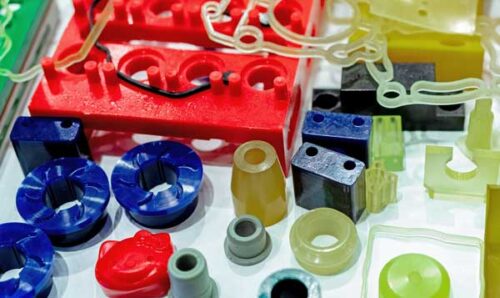
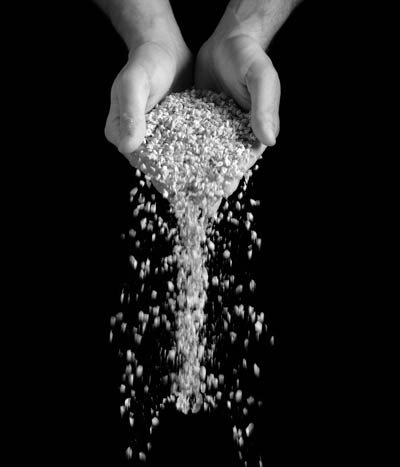
 Molded thermoplastics may be worked using a few different methods: injection molding, blow molding, and extrusion. Injection molding involves heating plastic pellets to a molten state, injecting it into a mold cavity under high pressure, then allowing it to cool and solidify.
 Thermosetting plastics, simply known as thermosets, are polymers that undergo a chemical change when heated, thus forming a rigid structure. Once set, they cannot be remelted or reshaped. When compared to thermoplastics, they are usually more stable, but also more brittle. Typical materials include Epoxy, Phenolic, Melamine, Urea-formaldehyde, and Polyester resins.
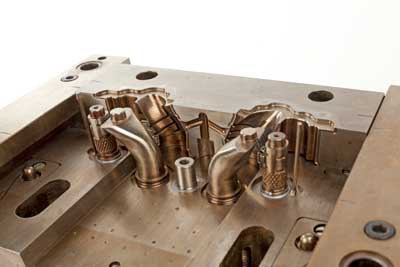 This process involves shaping rubber materials, which can be either natural or synthetic rubber (elastomers). Rubber has high elasticity and abrasion resistance with good tensile strength. These properties vary based on the type used, which include Natural Rubber, Neoprene, and Nitrile Rubber.

 will utilize inline part inspection to help ensure part quality. With this critical step, an image of the finished part is taken, compared to a reference image, and is either accepted, or, sadly, pushed into the reject bin. (But don’t be too sad, that part will get a second chance here at PDI, since we recycle all excess plastic inline!)


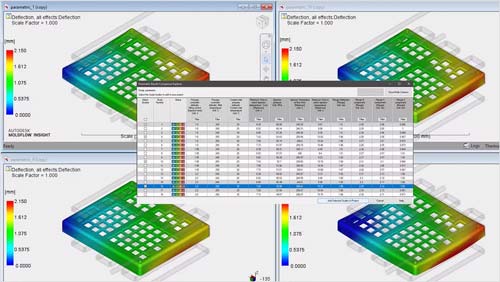
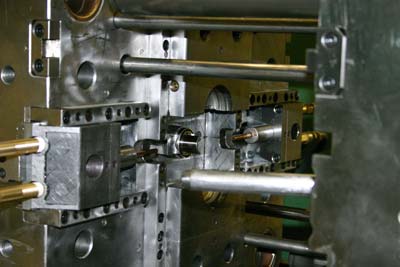 There are three aspects of plastic part design that are often overlooked, but crucial for manufacturing success: surface finish, texture, and draft angles. Understanding and optimizing each is critical for fabricating consistent, high quality plastic components efficiently.
 Texture – helps enhance the look, functionality, and performance of the finished component. Common options include leather-like, pebble/sandblasted, geometric patterns, and micro textures. Leather-like finishes enhance aesthetics, functionality, and performance. Pebble or sandblasted textures are durable and hide scratches. Geometric patterns provide functional grip, but may also be used for decorative purposes. Finally, micro-textures are ideal for parts where glare reduction or wear resistance is desired. Note that fine textures might require more intricate mold designs. One last thought on texture: textured molds can be more expensive to manufacture.
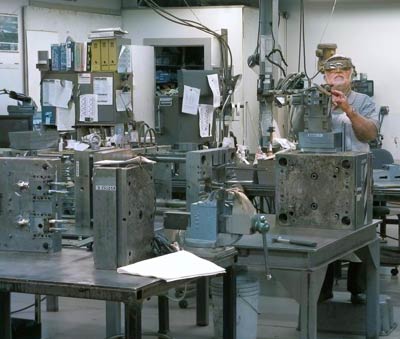 Improved Quality – Proper mold maintenance will lead to higher quality products by preventing defects such as flash, sink marks, and warpage.
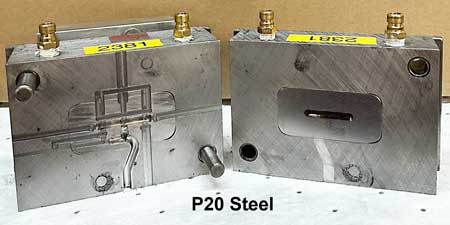 When it comes to creating prototype molds for injection molding, choosing the right material is crucial. Two common options for prototype mold construction are aluminum and soft steel (P20). Today, we’ll compare these two materials to help you make an informed decision. For the purposes of today’s discussion, we’ll be talking about “late stage” prototype molds. These are molds that are likely to be used for medium to high volume production runs, not just to knock out a few early-stage prototypes.
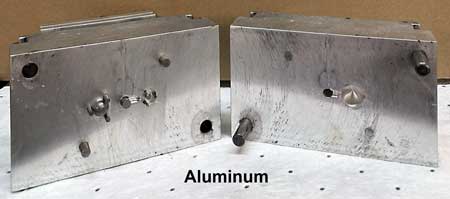 Heat Conduction – aluminum dissipates heat quickly and efficiently, meaning reduced cooling time during the injection molding process. Steel holds heat longer, leading to extended cooling times, which could lengthen production time. Also consider the required melting point of the material being molded. For those that require higher values, steel is the way to go.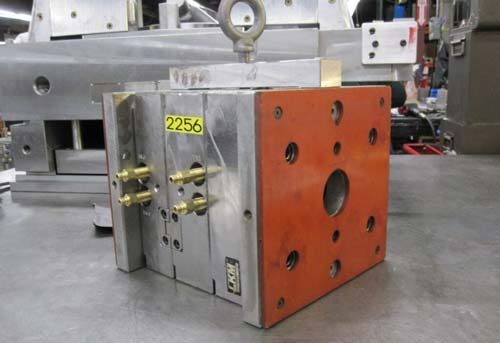
 In the world of injection molding, longevity translates to cycles. In other words, how many impressions can be made in that mold before it needs to be replaced? Note that, regardless of configuration, longevity also depends on various factors including material and maintenance. Self-contained molds tend to outlive insert molds, as they are usually comprised of higher-quality materials.
 Scientists estimate that there are 5 trillion tons of plastic in the world’s oceans.